
The expansion and contraction of materials due to temperature change is a basic rule of physics.
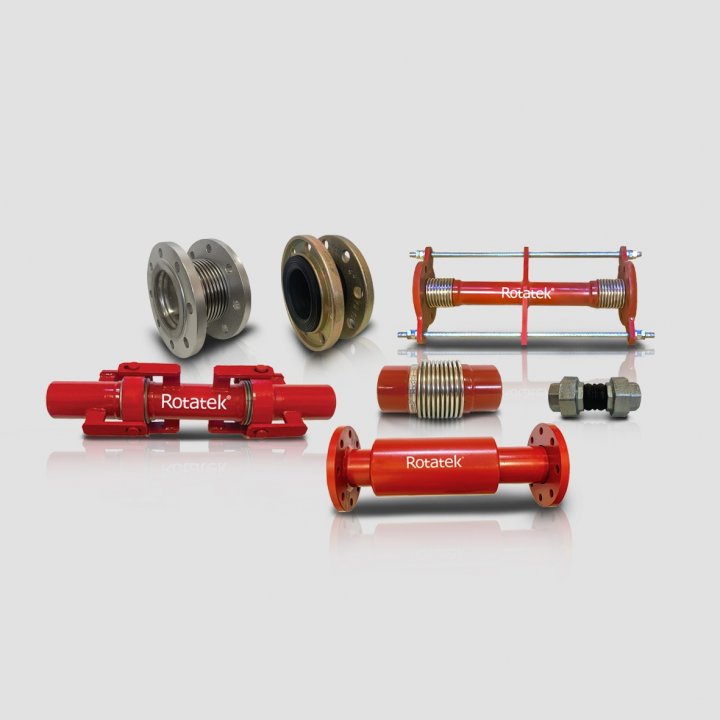
Expansion Joints absorb the expansion, contraction and vibrations that occur in pipe systems and ensure flexible and uninterrupted operation of the system. The usage areas of expansion joints are very wide. Thermally pressurized containers are widely used in the industries of piping, handling and transportation.
Expansion Joints used for the right purposes have properties of being pressure and vacuum resistant, temperature resistant, rust-free, maintenance-free, with long service life, economical and reliable in service.
The main element of the expansion joint is the flexible ondulation part. Mostly 18/8 Cr-Ni austenitic stainless steel is used as ondulation material. In cases where the operating pressures are very high and certain flexibility is to be taken, multi-layer ondulation is applied. Connection Types of Expansion Joints;
1. Flanged
2. With Welded Neck
3. Threaded Connections
Grooved connection can also be easily performed according to the type of expansion joint.
Flanged Connection: Depending on the user's request and working conditions, the connection of the flanges to the expansion parts is;
• Floating flanged
• Fixed flanged
• Made with welded neck flanged type.
Connection with Welded Neck: It is made in places where welded manufacturing will not cause problems and in installations where the pipeline is welded.
Threaded Connection: These are normal and decorative type expansion joints which are widely used to absorb pipe shrinkage and expansion, to provide sound insulation and to eliminate pipe curvatures in the heating system column lines of multi-storey high-rise buildings.
Accessories for Expansion Parts
Liner: Layner: The use of this element is mandatory in the following cases.
Protective Cylinder Heads: Protects the expansion joint bellow against mechanical impacts. If the expansion joint also needs to be insulated, insulation material should be applied around the protective cylinder head.
Limit Bars: Limit bars can be used to prevent unwanted movements during the use of lateral expansion joints.
Types of Expansion Joints
Axial Type Expansion Joints: Thermal expansions in the pipe are compensated by the lengthening and shortening of the ondulation length without creating thermal expansion stresses.
Externally Pressurized Expansion Joints: To absorb large expansions in very long pipelines, expansion joints with a large number of spheres are required.
Lateral Expansion Joints: The extension that may occur in a plane in two dimensions is eliminated by a lateral expansion joint to be placed in the second dimension. An important feature of the lateral expansion joint is that it can absorb axial movement as well as lateral movement.